Catholic Character Education through
'Virtues to Live By'
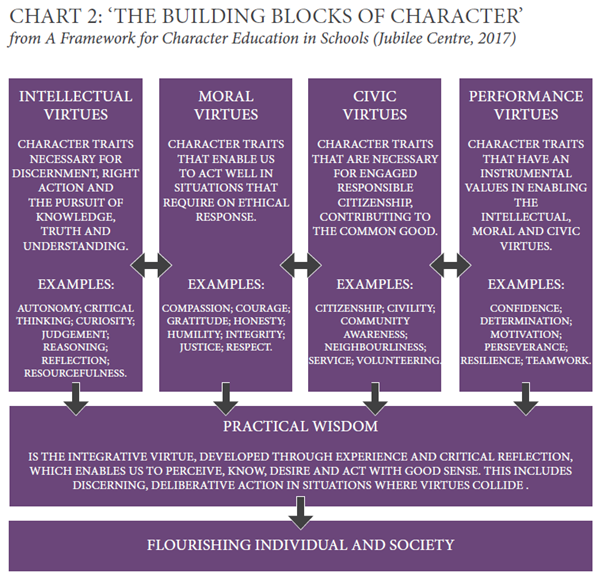
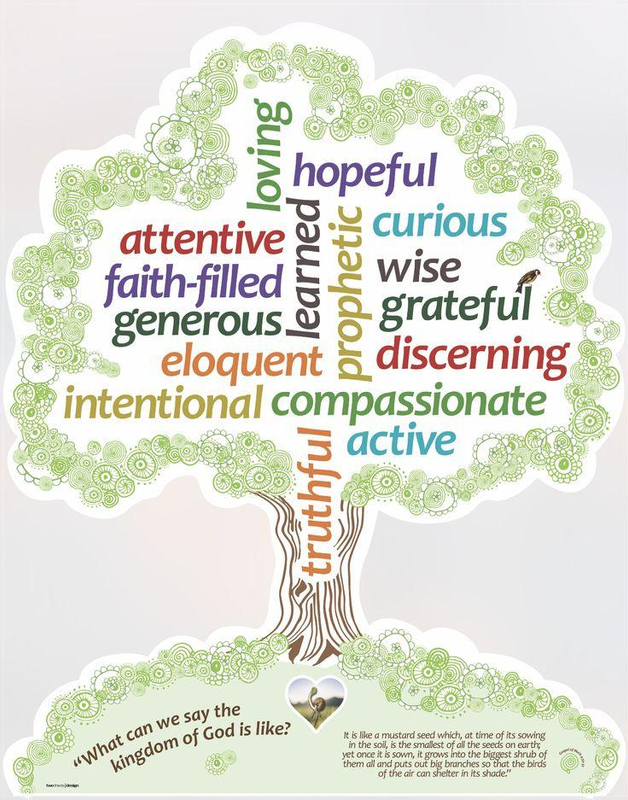
Catholic character education promotes a shared vision of life based on Christ centred virtues that seeks the flourishing of pupils, young people and all members of the school community. This shared vision, embodied in the ethos of the school from which all educational activities proceed, calls pupils, young people and all members of the school community to grow in positive personal strengths called virtues. These virtues are broad and balanced and include the theological, moral, civic, intellectual, and performance based virtues.
“Virtues to Live By” enables us all to explore each virtue over a three week period (two per half term) to improve the school community’s virtue literacy and to deepen understanding and appreciation of the essential role the virtues play in the education of the whole person towards human flourishing. The virtues chosen are common across cultures and faiths, but are sourced from the Christian tradition. They are linked directly to work in the Diocese of Leeds on the virtues and character education (see companion documents here dioceseofleeds.org.uk/education/re-catholic-life/character-education).
“Virtues to Live By” is a resource created by the Diocese of Leeds with the creative and financial support of the Leeds Diocesan Association of Primary Headteachers.
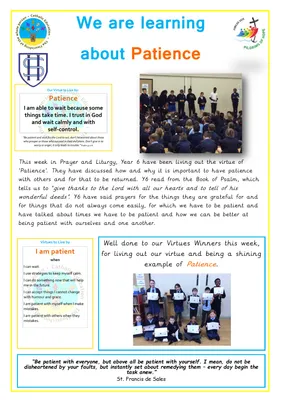
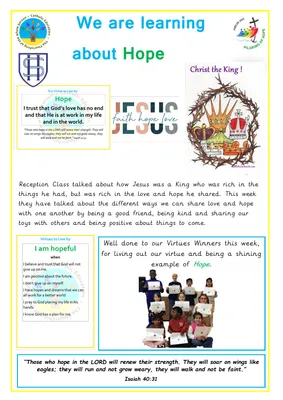
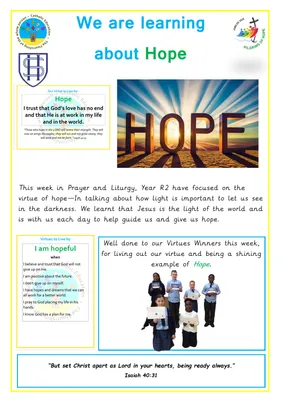
The school focuses on a virtue every three weeks. The children think about what the virtue means, how we can see it in others and how we can manifest it in ourselves. Each week, we look at a particular aspect of the virtue and an award is given to a member of each class in Friday's Award Assembly to a child who has 'lived' the virtue across the week. Acts of worship and circle times also link to the virtue and we have 'Signs of living the virtue' - things to 'notice' or look for that demonstrate the virtue.
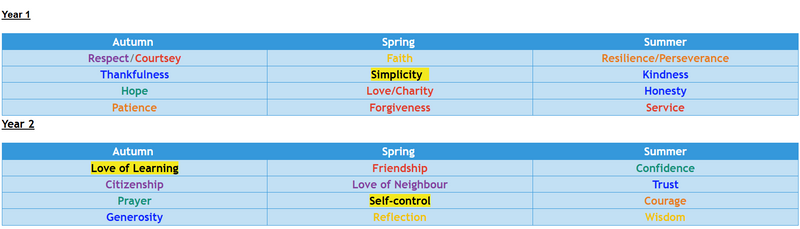
The chosen virtues are linked to the academic year and run on a two year cycle:
“Virtues to Live by” Guiding Principles
To ensure children and young people are given opportunities to:
- Experience a positive and purposeful ethos providing a sense of belonging to their school community.
- Grow in their knowledge and understanding of the virtues.
- Practise the virtues to further the call to live life to the full.
- Appreciate the connection between biblical and practical wisdom and living.
- Hear the Christian story and encounter it in practice.
- Understand their uniqueness and dignity as made in the image and likeness of God.
- Know that our limitations are also opportunities for growth.
- To notice, to reflect, to pray and to play
- To exercise the cognitive, affective and behavioural components of character: know it in your head, feel it in your heart and show it with your hands.